Value
How much is my vinyl record worth?
Start with three things: the pressing, the condition and recent sold prices. An asking price is only what a seller hopes to get.
The title and artwork are not enough to price a record. Plastic, a collection app for vinyl, CDs and cassettes on iPhone and Android, can help you identify the pressing and save its condition and purchase history. Checking its value means comparing it with copies that have sold.
What is the difference between an asking price and a sold price?
An asking price can stay online for months or years. It does not show that anyone agreed to pay it.
Look at completed sales for the same pressing. Compare copies in similar condition. Discogs has sales history for releases, and other marketplaces let you filter for sold listings.
How much does condition matter?
A lot. Grade the record and the sleeve separately. A clean record in a damaged sleeve has two different grades.
Collectors often use the Goldmine grading scale. These are brief descriptions of record grades; sleeves need a separate assessment:
- Mint. Perfect condition, with no defects. Use this grade sparingly.
- Near Mint. Almost perfect, with no visible defects or surface noise when played.
- Very Good Plus. Minor wear that does not affect the listening experience.
- Very Good. Visible wear and some surface noise.
- Good or Good Plus. Significant wear and surface noise, but it plays without skipping.
- Fair or Poor. Damage that may cause skipping or prevent playback.
Use a strong light to inspect scratches and scuffs. If you can play the record, listen as well: appearance does not reveal every playback problem. Note specific flaws rather than relying on the grade alone.
Why does the pressing matter?
A first pressing and a later reissue can use the same artwork and tracklist. They can still have very different prices.
Check these details:
- Catalogue number. Look on the spine and label.
- Country and label design. Check the text, logo and address.
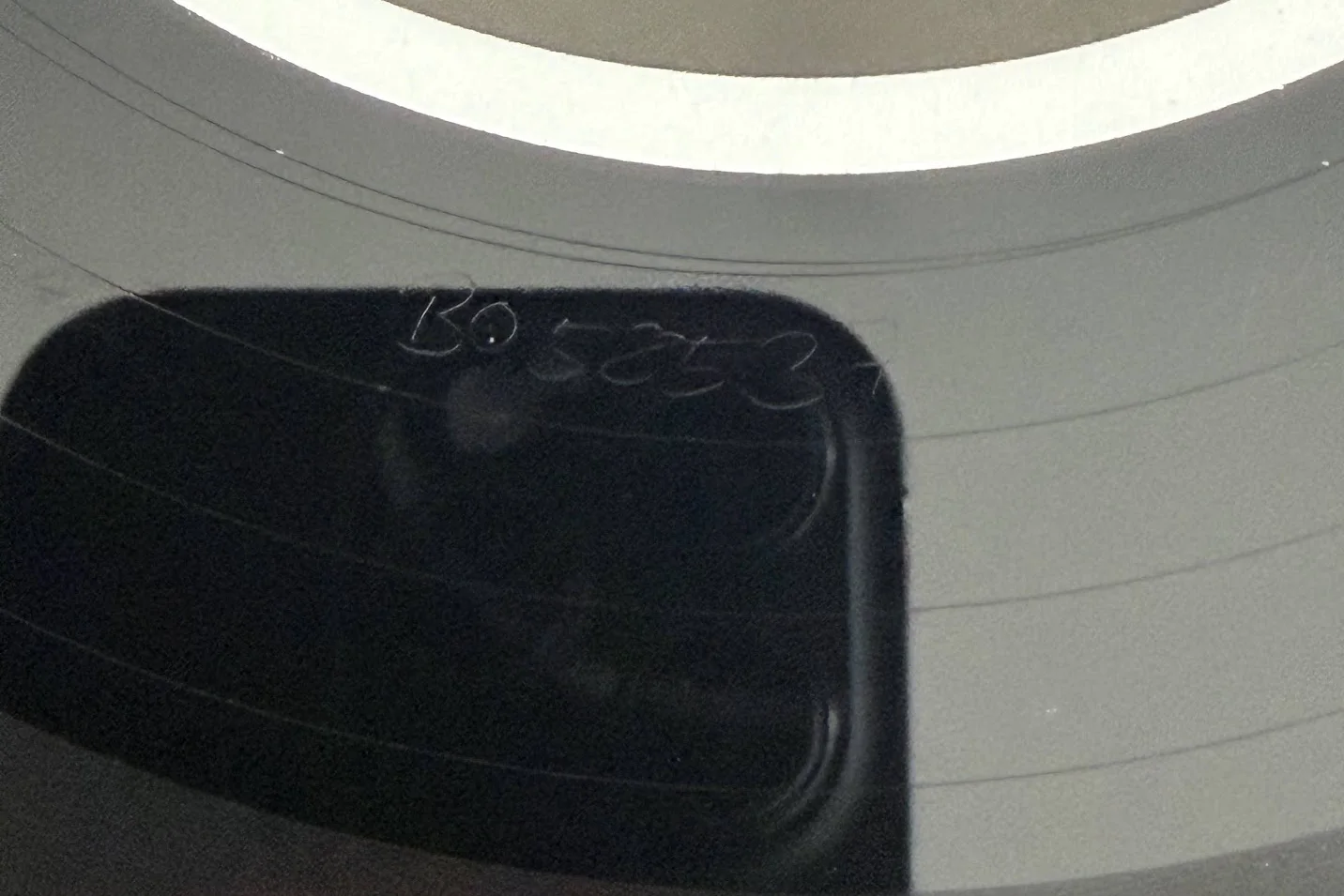
- Runout. Read the letters and numbers between the last groove and the label.
Work with the exact release rather than the general album entry.
For more detail, read how to search dead wax.
If the record has a barcode, the vinyl barcode scanner guide explains how to narrow the release before checking prices.
Is a rare record always valuable?
No. A scarce record only has a high price when people want it. A common record can hold its price when demand stays strong.
Recent sales are more useful than a guess based on age or rarity.
Where should I check the price?
Start with sold history for the exact release on Discogs. Then check completed sales on another marketplace. Look for several comparable sales, not just the highest result. A single unusually high or low sale may tell you little about your copy.
Before looking at prices, write down the pressing and both condition grades. Otherwise it is easy to compare your copy with a better copy of a different release.
When is a closer check worth the time?
Check carefully when you are buying, selling or trading a record. It is also worth checking an unusual label, country, promo mark, withdrawn sleeve or small local pressing.
For a common recent reissue, a quick look at recent sold prices may be enough.
What can Plastic keep about a record?
Once you have identified the pressing, save the record and sleeve grades in Plastic. Add what you paid and a note about where you found it. With Discogs connected, condition and purchase price sync when matching Discogs fields exist. Discogs sync is free on every Plastic account.
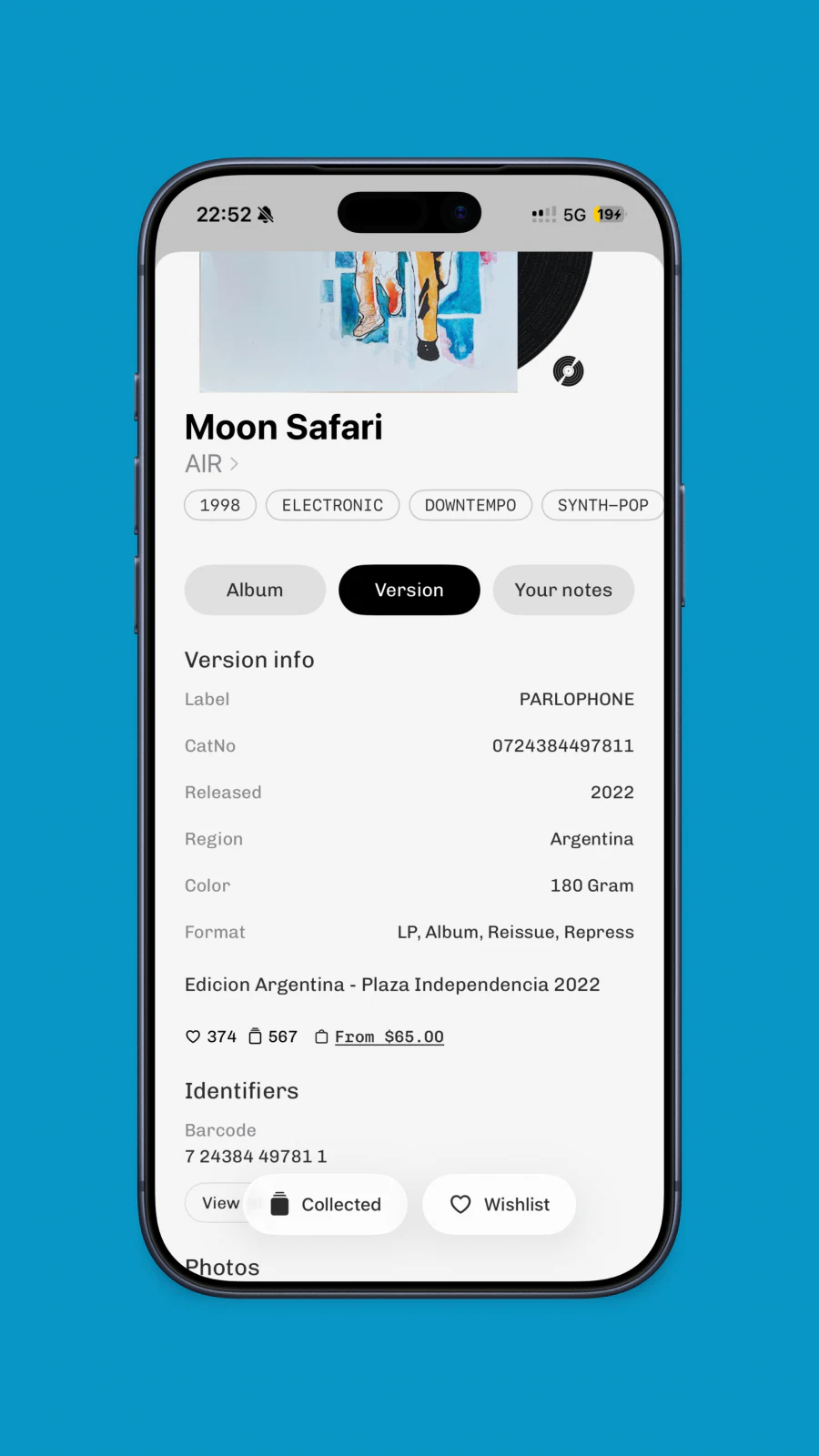
When marketplace data is available, the pressing details show a Discogs "From" price. Tap it to open the listings. This is an asking price for a copy currently for sale, which may be in a different condition from yours.
With Discogs connected, Plastic's profile shows the estimated collection total supplied by Discogs. It is separate from an individual listing price and depends on the sales data Discogs has. It does not tell you what a buyer would pay for your whole shelf.
Plastic can identify specific pressings through barcode scans and direct release matches. For similar editions, compare their identifiers in the version picker. Grade the record and sleeve yourself before comparing prices.
Vinyl record value FAQ
How do I check a record's value for free?
Identify the pressing, grade the record and sleeve, then compare recent sales for copies in similar condition.
Are old records worth more?
Not because of age alone. Pressing, condition and demand matter more.
Does a barcode tell me the value?
No. A barcode can narrow the release, but it does not show the condition or what buyers paid.
Does Plastic value my collection?
Plastic shows current asking prices. With Discogs connected, it also shows Discogs' estimated collection total. Neither number is a professional valuation.
Can Plastic tell a record's value from a cover photo?
No. A cover can help identify the album, but value depends on the exact pressing, condition and real sales. Plastic keeps those details together after you choose the pressing.